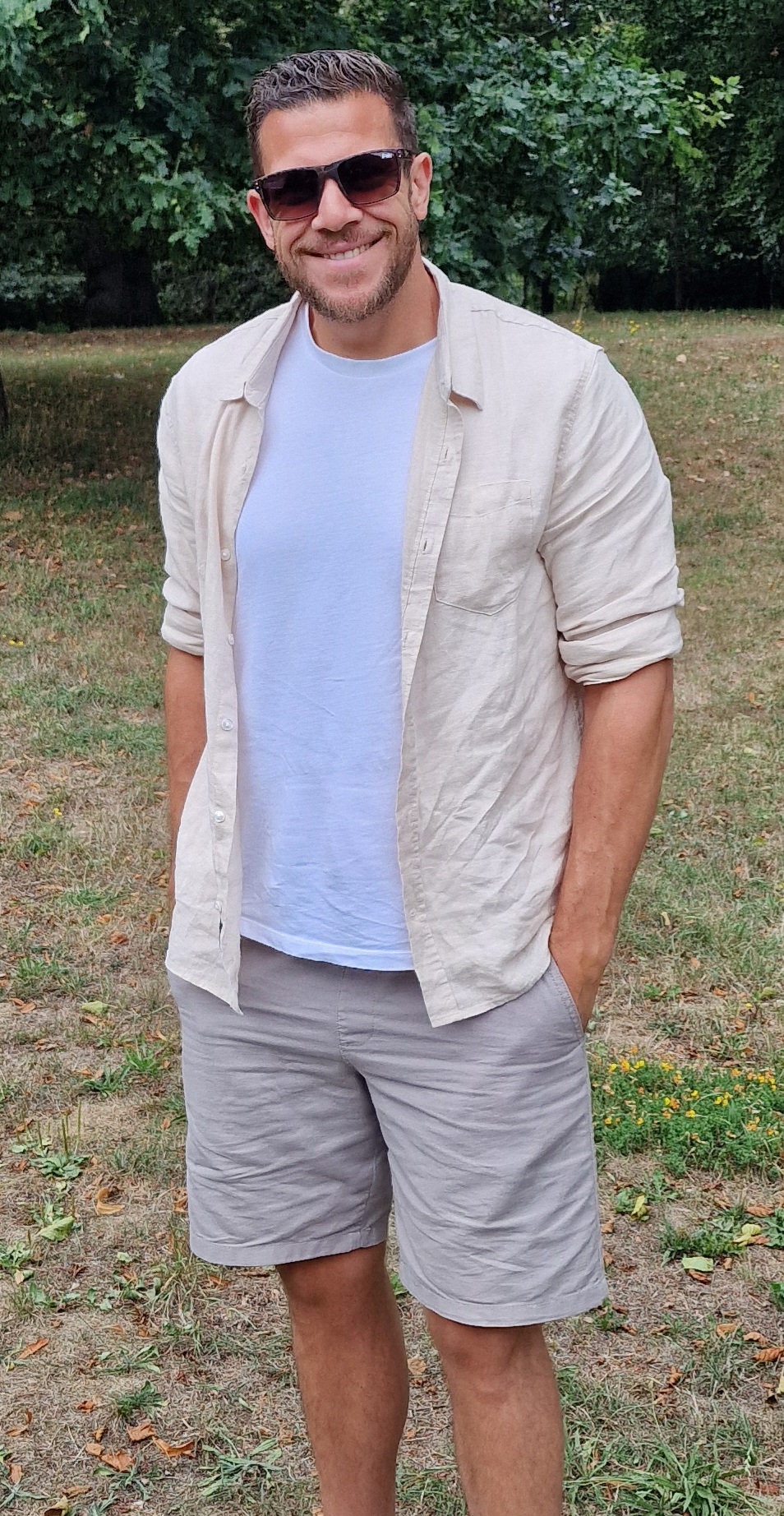
About Me
Software engineer at IBM · Electronic engineering background · Based in the UK
How I got here
I started out in engineering: several years in ATM field service before progressing to become a 3rd line technical support specialist covering the UK and Ireland. The role involved in-depth fault diagnosis, account management, and leading small teams. Good, practical work, but I always wanted to go deeper into the technology side of things.
In 2015, I decided to do something about that and enrolled in a BEng (Hons) Electronic Engineering degree at Southampton Solent University, while continuing to work full-time. Three years of early mornings, evenings, and weekends later, I graduated in 2018 with an honours degree accredited by the IET. That experience taught me to be ruthless about time, to focus on understanding rather than memorising, and to keep going when things are hard because the deadline doesn't move just because you're tired. Those habits have never left me.
I joined IBM straight after graduating and have been there ever since. That probably says something about the variety of work available when you're inside a company that builds software at that scale.
The IBM years
I started at IBM as a consultant, moving between projects and picking up new technologies as each engagement demanded. Projects ranged from web application development using Node.js, AngularJS, and React, to AI and chatbot work with Watson Assistant and Cloud Functions, to open source clearance and compliance work.
One project from that time: building an internal chatbot for my department using Watson Assistant and Python Cloud Functions. It was designed to take load off the management and HR teams by answering common questions, and was rolled out to around 800 people across the department. Building something that actually gets used at that scale, in your own organisation, is a different kind of satisfaction to client work.
In October 2020, I moved over to work on CICS Transaction Server, where I focus on test automation, developer tooling, and core feature delivery. Working on mission-critical enterprise middleware brings a whole different set of engineering challenges: extreme reliability, deep systems debugging, and building testing infrastructure that can validate complex transaction workloads at scale.
How I approach work
- Understand the problem firstBefore writing a line of code, I want to understand what's actually being asked and why. The right solution often isn't the obvious one.
- Simple over cleverCode that's easy to read is easier to debug, maintain, and hand over. Complexity is a liability that compounds over time.
- Test as you goTesting is part of development, not a phase that comes after. I write tests alongside the code. That's how I know the thing works.
- Own it end to endI take responsibility from the first commit to production. If something I wrote breaks, I want to know about it and I want to fix it.
- Communicate earlyA short conversation before starting saves hours of rework. Assumptions are expensive. I'd rather ask a dumb question than build the wrong thing.
- Stay curiousTechnology moves fast and the interesting problems change. I stay current by building things, reading, and being willing to be wrong and learn from it.
Outside of work
I've been fascinated by aviation for most of my life, not as a technical expert but as a genuine enthusiast. Getting on a plane is a pleasure in itself; airports are the start of something good. I enjoy watching aircraft, particularly landings. There's something about the precision of a plane coming in low over a road, like the viewing spot beside Luqa airport in Malta, that never gets old. The engineering is fascinating too, in a broad sense: the sheer improbability of a 500-tonne aircraft crossing an ocean reliably enough to be a commodity. It all ties into a love of travel and the flying is rarely just the means to an end.
I'm also a football supporter, the kind who stays invested even when results don't justify it, which is most seasons. I follow the tactical side as much as the results: how teams set up, how managers adapt in-game, the interesting problems that modern football analytics is trying to solve.
I'm interested in history, particularly the 20th century. A lot of what I've picked up has come through travel rather than books: visiting places and understanding what happened there is a much better way to make it stick. And I watch a lot of films and series. Sci-fi is the favourite genre but the list is pretty broad: Aliens, Back to the Future, The Martian, Iron Man, Harry Potter. On the series side, Ted Lasso, Breaking Bad, Afterlife, Band of Brothers, Only Fools and Horses, Red Dwarf. Not a completist, but I do think a lot about the ones that stay with you.